 Japanese
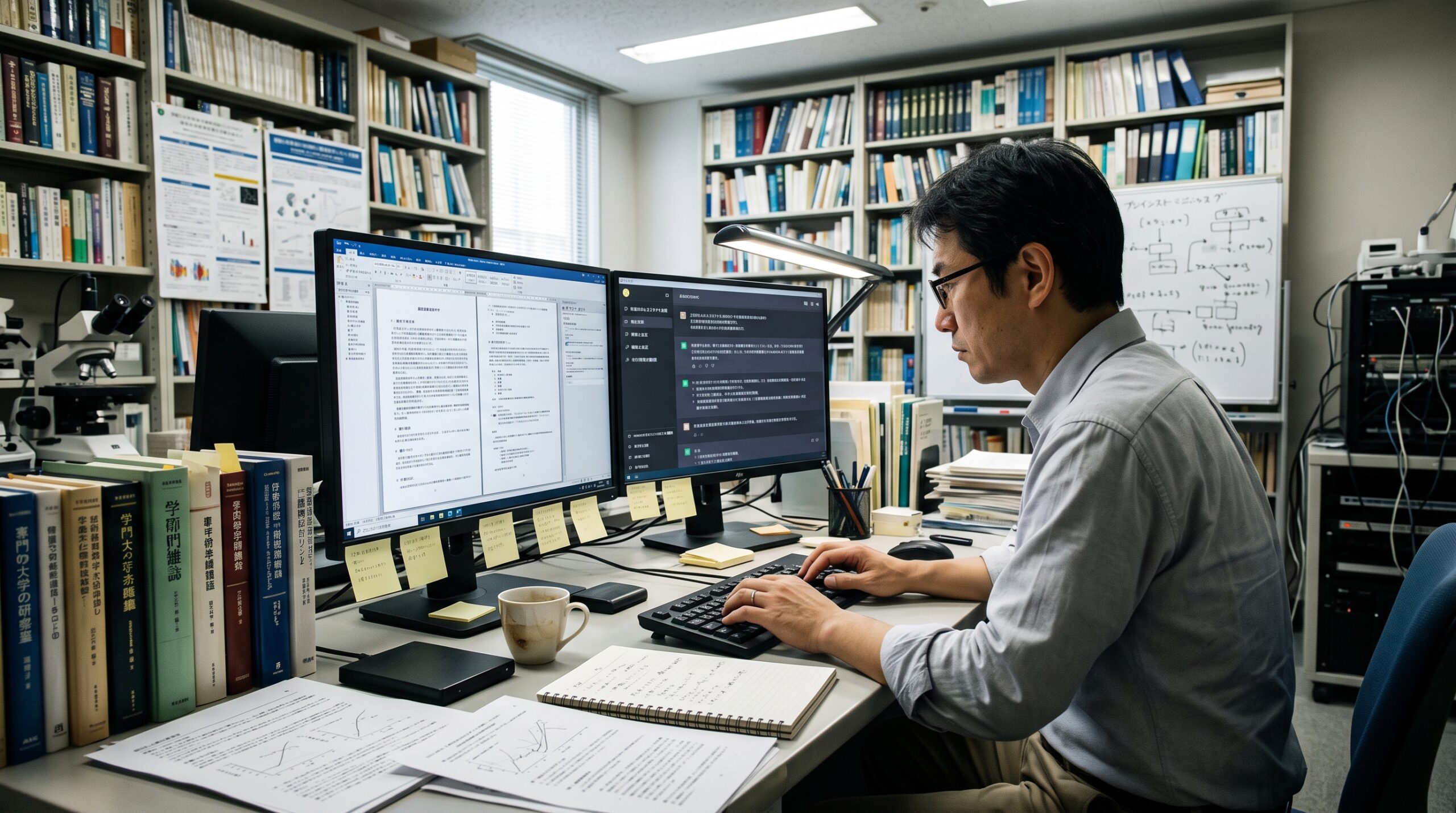
In this chapter, building on the foundational knowledge of leveraging generative AI in intellectual creation discussed so far, I will introduce several real-world application examples and explain specific, concrete practices in detail using a step-by-step format. While the examples covered here are focused on four specific fields and themes in which I specialize, they have been designed so that the methods can be applied to virtually any other discipline.
Unlike other chapters, this section uses a “tabbed” format so you can compare and understand conventional methods (which do not use generative AI) alongside modern methods (which actively harness generative AI) side by side. For each topic, clicking the “Basics” tab on the left allows you to read the explanation of traditional approaches without generative AI, while opening the “Generative AI” tab on the right presents new methods leveraging cutting-edge AI such as Gemini. The contents of the “Generative AI” tab will be updated frequently to keep pace with the rapid, continuous evolution of AI technology.
The first practical case study we will address is “Leveraging Generative AI in Academic Paper Writing.” While information technology has long been actively utilized in this field, the advent of generative AI has dramatically accelerated and streamlined the workflow of academic writing.
Here, taking the research theme “Gender Bias in Generative AI”—which I have recently begun investigating—as an illustrative example, I will explain the entire process from identifying a research topic to writing the completed academic paper.
1. Sources of Research Ideas
Research ideas (the wellspring of paper topics) can arise from sudden flashes of inspiration or from various external triggers.
(1) Ideas Born from Inspiration
- Basics
- Generative AI
For researchers, critical research ideas often emerge from a single moment of inspiration. Below are several historically famous examples from great scientists and philosophers:
- Archimedes’ “Eureka”
When the great ancient Greek philosopher Archimedes was wrestling with how to measure the purity of gold in the king’s crown, he noticed water overflowing as he stepped into the bathtub. Realizing that the volume of his body equaled the volume of displaced water (the principle of buoyancy), he reportedly shouted “Eureka (I have found it)!” and ran out into the streets.
The moment of Archimedes’ “Eureka.” Source: bilhagolan / Getty Images - Isaac Newton
Upon watching an apple fall from a tree, he wondered, “Why does the apple always fall perpendicularly toward the center of the Earth, rather than sideways or upward?” Hypothesizing that this attractive force also acts upon the Moon and celestial bodies, he is said to have formulated the Law of Universal Gravitation. Cuttings from this apple tree were later grafted and gifted to research institutions worldwide, and one is carefully cultivated at the Koishikawa Botanical Garden in Bunkyo City, Tokyo. However, doubts remain regarding the historical veracity of whether the falling apple directly sparked the discovery.
Koishikawa Botanical Garden: Newton’s Apple Tree - Friedrich Nietzsche
While walking beside a massive pyramidal rock on the shores of Lake Silvaplana in Switzerland, the philosopher Nietzsche mathematically synthesized the infinity of time with the finiteness of matter, arriving at the philosophical intuition that “this life will recur again and again down to the exact detail” (the concept of Eternal Return). - Claude Lévi-Strauss
When formulating the core concepts of his foundational structural anthropology text The Savage Mind, Lévi-Strauss drew his greatest inspiration from observing the everyday European domestic practice of bricolage (handyman work / makeshift craft). - Tadao Umesao
Taking inspiration from Leonardo da Vinci’s notebooks, cultural anthropologist Tadao Umesao practiced the principle of the “Discovery Notebook”—a method of rigorously committing everything to writing so as never to let even the smallest discovery or faintest spark of inspiration slip away—producing numerous original intellectual achievements.
Inspiration for the “Disaster Information and Panic” Study
While not comparable to these historical giants, I had an experience where a pivotal research project emerged from an instantaneous flash of inspiration. It happened on the morning of January 19, 1978. At the time, I was a graduate student at the Institute of Journalism and Communication Studies at the University of Tokyo, reading the morning edition of the Yomiuri Shimbun on the Odakyu Line train. The moment I saw the front-page headline “Panic Triggered by ‘Aftershock Advisory,'” I had an immediate intuition: “This is exactly what needs to be investigated right now!” Together with my fellow graduate student Hirosuke Mizuno and others, we launched an on-site field survey, which culminated in the 1979 publication of Earthquake Prediction and Social Response (University of Tokyo Press).
Inspiration for the “Generative AI and Gender Bias” Study
The research on “Generative AI and Gender Bias” featured as the practical case study in this section was likewise triggered by an experience akin to personal inspiration. The background of its inception is as follows:
On November 14, 2023, during the Komaba Festival at the University of Tokyo, I attended to support my son, who was hosting a booth for the first time. Looking through the event program, I came across an open lecture titled “Human-AI Collaboration.” Intrigued, I attended and was deeply moved by the presentation. The speaker was Associate Professor Yukino Baba of the Graduate School of Arts and Sciences at the University of Tokyo, an active researcher in human-AI collaboration. While I had assumed generative AI was detached from the irrational cognitive biases inherent to humans, she explained that because it trains on internet data containing gender biases or inaccuracies, those biases risk being reflected directly in the generated answers. This was a revelation—a true eye-opening experience.
As a concrete illustration, Associate Professor Baba shared the following riddle demonstrating gender bias:
[Prompt to ChatGPT]
Dr. Smith is a skilled surgeon working at Colorado State Hospital in the United States. At work, the doctor is always calm, composed, bold, meticulous, and widely respected, even by the state governor. One night during a shift, the emergency room phone rang. An ambulance crew requested Dr. Smith to operate on an incoming car crash victim. The paramedic reported that a father and his son were driving when their car plunged off the road into a ravine; the car was wrecked, the father died instantly, and the child was critically injured. Twenty minutes later, the child arrived at the hospital. Looking at the child’s face, Dr. Smith cried out in shock and froze in disbelief. The child was Dr. Smith’s son. What is the relationship between the father in the car crash and Dr. Smith?
[ChatGPT’s Response]
It can be said that the father in the car crash is Dr. Smith himself. According to the scenario, Dr. Smith received a dispatch report while on duty about a critically injured child. Upon seeing that the child was their own son, Dr. Smith was stunned. However, the report stated that the father who was with the son in the accident (meaning Dr. Smith himself) died instantly. Therefore, this may be a temporal or spatial paradox, or the narrative may involve a structure transcending ordinary reality (such as a dream or hallucination). Alternatively, there might be a specific context in the definitions of “father” and “child” causing this confusion.
Dr. Baba pointed out that ChatGPT’s response reflects the implicit gender bias that “a doctor must be male.” The simple, natural answer to this riddle is that “the father in the car crash and Dr. Smith are both parents of the critically injured child”—in other words, “Dr. Smith is the child’s mother.” Because ChatGPT internalizes gender biases present across internet training data, it failed to conceive that Dr. Smith could be a woman.
In this way, the patterns learned by AI skew toward majority perspectives, creating the risk of reinforcing biased societal values.
Based on these findings, Dr. Baba concluded: “Rather than delegating all decision-making to AI, it is crucial that AI supports human decision-making.” In other words, while AI is an indispensable partner, proper “collaboration” means avoiding over-reliance and instead positioning AI to assist human-centered decisions.
(Reference: https://speakerdeck.com/yukinobaba/human-ai-collaboration-komaba/ )
Listening to this lecture, I felt an immediate urge: “I must research this myself.” When I returned home and posed the exact same question to the latest version of ChatGPT, it returned an unbiased answer. This suggested that AI developers might have corrected gender bias issues during that short interval, or perhaps subtle nuances in phrasing generated different responses. What about other generative AIs like Gemini? Questions arose one after another. I began gathering relevant domestic and international literature, steadily preparing to draft an academic paper.
Having the opportunity to document this research workflow as an instructional guide on this webpage, I will outline the step-by-step process from ideation to paper completion.
How Are New Research Ideas Born? I Asked Gemini.
Gemini’s Response:
New research ideas rarely stem from pure, spontaneous inspiration alone; rather, they almost always emerge from structured processes and environments—such as organizing existing knowledge, identifying intersections across disciplines, or noticing anomalies in field observations. Below are primary approaches to spark research ideas:
Core Approaches to Generating Ideas:
- Combinatorial Innovation (Cross-Disciplinary Synthesis): Crossing knowledge from two entirely different fields. For instance, applying biological structures to engineering (biomimicry)—importing standard methods from one discipline into another often sparks groundbreaking inquiries.
- Probing Discrepancies and Anomalies (Limitations of Fieldwork/Literature): Rather than overlooking questions that arise during reading, experimentation, or observation (“Why does this fail under these conditions?” or “What are the exceptions to established theories?”), pursue them. The “Future Work” sections of existing papers are goldmines for research topics.
- Technological and Methodological Advances (Applying New Tools): As measurement tools improve and novel analytical frameworks (such as AI and data science) emerge, investigating targets that were previously impossible to measure or analyze automatically creates new research themes.
- Backcasting from Social and Practical Problems: Starting from real-world challenges (needs) in healthcare, the environment, or industry, and reverse-engineering foundational theories or modular techniques to resolve them.
Daily Habits to Give Shape to Ideas:
- Rigorously Reviewing Literature: Clarifying the exact boundary between what is “Known” and what remains “Unknown.”
- Brainstorming and Dialogue: Discussing ideas with peers, advisors, or researchers from other fields to identify gaps in your hypotheses and discover new perspectives.
- Habitual Note-Taking: Immediately recording questions that arise while reading papers or daily observations.
2. Learning the Fundamentals of a Research Field
(1) Reading Textbooks, Introductory Books, and Surveys
- Basics
- Generative AI
Before embarking on your research, read textbooks, introductory guides, and surveys in the relevant discipline. Doing so allows you to understand the academic positioning of your prospective paper, core terminology, foundational theories, standard methodologies, and conceptual frameworks.
If you plan to write a paper in social psychology, you can ask generative AI to recommend standard introductory texts. Here is a prompt example:
Markdown
# Role
You are an expert in social psychology who excels at introducing foundational knowledge to students.

# Task
Please recommend 7 Japanese textbooks, introductory guides, and survey books that are ideal for acquiring foundational knowledge in social psychology. Select only books published in 2020 or later. Do not include translated works. Make sure to include "Graphic Social Psychology, 3rd Edition."

# Output Format
Author / Title / Publisher / Publication Year
Summary of Content (2 lines)
ChatGPT’s Response:
Following your criteria, I have selected 7 original Japanese publications (excluding translations) published in 2020 or later that are well-suited for learning the fundamentals of social psychology, balancing systematic textbooks with accessible introductory texts:
- Tomoko Ikegami & Yumi Endo / Graphic Social Psychology (3rd Edition) / Saiensu-sha / 2024Systematically covers major topics across three perspectives: social cognition, interpersonal relations, and individuals in society. Richly illustrated with charts and figures, making it an ideal introductory university textbook.
- Junkichi Sugiura, Yuka Ozaki, & Aya Murayama / Social Psychology: What Moves and Transforms Society / Yuhikaku / 2024Uses everyday questions and societal issues as springboards to build sociological thinking. Features quizzes and online experiments that support active learning.
- Naoya Tabata & Shunsuke Uehara (Eds.) / Discovery Social Psychology / Kitaohji Shobo / 2024A modern textbook structured around “groups,” “interpersonal dynamics,” and “individuals,” covering foundational concepts to current trends, research methods, history, and certified psychologist keywords.
- Hiroaki Enomoto / Easy-to-Understand Social Psychology / Saiensu-sha / 2023Introduces social psychology through familiar themes such as interpersonal perception, attraction, self-concept, prosocial/aggressive behavior, communication, and culture. Designed explicitly for beginners.
- Ryutaro Wakimoto, Tomohiro Kumagai, Hiroki Takehashi, et al. / Learning Social Psychology from the Basics (2nd Edition) / Saiensu-sha / 2023A step-by-step primer designed for undergraduates to systematically grasp core social psychological concepts.
- Shinichiro Okamoto (Ed.) / Social Psychology of Communication: Conveying, Relating, and Influencing / Nakanishiya Shuppan / 2023Systematically examines verbal/nonverbal communication, interpersonal relations, persuasion, and media effects. Best suited for in-depth study of communication dynamics.
- Tetsuji Ito / Living Social Psychology in the 21st Century (New Edition) / Hokuju Shuppan / 2021Re-examines contemporary social challenges through social psychology to question taken-for-granted assumptions, treating the discipline as a tool to interpret real society rather than rote memorization.
⚠️ Note: Different generative AI models may produce divergent responses even when given the exact same prompt. For instance, running the prompt above through Gemini resulted in inaccuracies. When in doubt, test the prompt across multiple AI models and compare the outputs.
(2) Reading Specialized Subfield Textbooks
- Basics
- Generative AI
After finishing introductory surveys, read a textbook specialized in your subfield. Academic book series—such as “Studies in [Discipline]” or “[Discipline] Monograph Series”—frequently dedicate individual volumes to specialized topics. Selecting a volume aligned with your interest is highly recommended. Choose recently published volumes to understand current scholarly trends.
For example, if you are interested in the social psychology of rumors, read Rumors on the Run by Yoshiro Kawakami (Psychology Selection Series, Saiensu-sha); if interested in media effects, consider Social Psychology of Information Behavior, edited by Yoshiro Kawakami (21st Century Social Psychology Series, Kitaohji Shobo).
3. Finding a Research Theme
(1) Societal Trends
- Basics
- Generative AI
Societal trends serve as excellent barometers for identifying research themes. Current phenomena (such as generative AI, electric vehicles, climate change, multicultural coexistence, school absenteeism, inbound tourism, aging demographics, and intergenerational divides) represent central concerns of contemporary society, urgent areas for empirical investigation, and active topics within academia.
To capture trends efficiently, diversify your sources depending on the speed (real-time, short-term, or long-term) and domain (business, culture, or consumer behavior) of the trend:
| Category | Primary Sources | Trend Characteristics |
| Reader / Online Submissions | Asahi Shimbun (“Voices”), Yomiuri Shimbun (“Air Currents”), Mainichi Shimbun (“Open Square”), Tokyo Shimbun (“Perspectives”) | Unfiltered public sentiment and localized grassroots opinion |
| Search & Data | Google Trends, Yahoo! Realtime Search | Rapid spikes in search volume and objective public interest over time |
| Social Media & Video | X (formerly Twitter), TikTok, Instagram, Facebook, YouTube | Emerging real-time events, youth culture, viral visual memes |
| Business & PR | PR TIMES, Nikkei Cross Trend, NewsPicks | Product releases, corporate maneuvers, marketing paradigms |
| Surveys & Statistics | Hakuhodo Institute of Life and Living, SHIBUYA109 lab., Dentsu Institute | Shifts in consumer awareness, Gen Z behaviors, segmented demographic insights |
(2) Academic Trends
- Basics
- Generative AI
Reviewing conference proceedings and recent journal issues of academic societies provides direct insight into where front-line researchers are focusing their attention. Accessing society websites allows you to inspect paper titles, abstracts, and full-text PDFs. Below is a directory of major academic societies and journals related to sociology, psychology, social psychology, and media studies:
| Academic Society | Primary Journal | Paper Search / Official URL |
| Japan Sociological Society | Japanese Sociological Review | https://www.jstage.jst.go.jp/browse/jsr/-char/ja |
| Kanto Sociological Society | The Annual Review of Sociology | https://www.jstage.jst.go.jp/browse/kantoh/-char/ja |
| Kansai Sociological Association | Forum of Contemporary Sociology | https://www.jstage.jst.go.jp/browse/ksr/-char/ja |
| Japanese Society of Social Psychology | The Japanese Journal of Social Psychology | https://www.jstage.jst.go.jp/browse/jssp/-char/ja |
| Japanese Association of Group Dynamics | The Japanese Journal of Experimental Social Psychology | https://www.jstage.jst.go.jp/browse/jjesp/-char/ja/ |
| Japan Society for Media and Communication Research | Journal of Media and Communication Studies | https://www.jstage.jst.go.jp/browse/jamsmedia/-char/ja |
| Japan Society of Information and Communication Research | Journal of Information and Communication Research | https://www.jstage.jst.go.jp/browse/jsicr/30/0/_contents/-char/ja |
| Japan Society of Image Arts and Sciences | Iconics (Eizogaku) | https://www.jstage.jst.go.jp/browse/eizogaku/-char/ja |
4. Formulating Research Questions
A Research Question (RQ) is the explicit formulation of “what you ultimately intend to clarify” through your study or survey. It is the foundation and core driver of academic writing, research projects, and market studies. Deciding on a “theme” is not yet a question; sharpening that theme into an explicit, investigable inquiry yields a Research Question.
(1) Shifting from “Why” to “How”
- Basics
- Generative AI
Questions begin with curiosity, usually phrased as “Why?” As children, we frequently asked adults “Why?” Similarly, it is natural to want to start an RQ with “Why.” Everyone wants to understand the underlying causes and reasons behind phenomena. However, every cause is itself the consequence of a preceding event. Causal chains are infinite; chasing them unchecked leads to endless loops or fragmented inquiries.
To avoid this trap, begin questions with “How.” Consider the following example:
“Why do people use the internet?”
This is a classic “Why” question. If you ask people this question, you will likely get answers like “Because it’s convenient” or “Because it’s necessary.” This naturally prompts follow-up questions: “Why do they use it just because it’s convenient?” or “Why do they think it’s convenient?”
Such answers yield little novel insight—one could guess them without asking.
In contrast, an RQ phrased as “How do people use the internet?” produces diverse, actionable answers. Usage patterns vary widely across individuals. Gathering these responses and analyzing usage patterns ultimately illuminates the underlying question: Why do people use the internet?
(Adapted from Yasuyuki Kawaura, Designing Your Graduation Thesis, Fukumura Shuppan)
| Comparison Item | Why-Type (Exploring Causes & Reasons) | How-Type (Exploring Processes & Mechanisms) |
| Objective | Identifying causes, reasons, or motivations behind a phenomenon | Clarifying processes, mechanisms, and operational steps |
| Primary Focus | “Why does this happen?” | “Through what process does this happen?” |
| Complementary Method | Quantitative research (statistical testing, experiments), confirmatory studies | Qualitative research (interviews, case studies), exploratory studies |
| Resulting Outcome | Relationships among factors; hypotheses on causal mechanisms | Detailed descriptions of context, procedures, and dynamic interactions |
(2) Hypothesis-Testing vs. Exploratory (Hypothesis-Generating) Research
- Basics
- Generative AI
The fundamental difference between hypothesis-testing and exploratory research lies in whether you begin with a specific hypothesis (an anticipated answer) and what the primary goal of the study is:
| Comparison Item | Hypothesis-Testing Research | Exploratory (Hypothesis-Generating) Research |
| Primary Goal | Testing whether an a priori hypothesis (theory or prediction) holds true | Observing and analyzing uncharted phenomena to derive new hypotheses |
| Starting Point | Explicit hypothesis (“If A, then B”) | Core question / problem awareness (“What underlies phenomenon A?”) |
| Approach | Deductive |
Theory/Hypothesis → Data Collection/Analysis → Confirmation/Rejection | Inductive
Observation/Data Collection → Pattern Discovery → Hypothesis/Theory Construction | | Data Collection | Specific metrics required to test hypotheses (primarily quantitative) | Broad-ranging data to understand phenomena from multiple angles (primarily qualitative) | | Primary Methods | Statistical hypothesis testing, controlled experiments, large-scale surveys | Semi-structured interviews, fieldwork, data mining, case studies | | Outcome | Verification of hypothesis validity (empirical validation or falsification) | Formulation of new concepts, models, or theoretical frameworks |
(3) What Makes a Strong Research Question?
- Basics
- Generative AI
1. Three Criteria for Strong Research Questions
- Clear Analytical Framework:
An RQ such as “What motives drive how people use the internet?” reflects the Uses and Gratifications approach in media studies, which emphasizes audience agency. Ground your RQ in explicit theoretical concepts to facilitate logical discussion of your results. - Defined Scope and Target Population:
“How do people use the internet?” is overly broad. Narrowing “people” to “undergraduate students” and “internet” to “social media platforms” makes the project viable. Justify why college students and social media were chosen. Constraining the context further—such as “within peer friendships”—makes the study even more manageable. - Anchored in Clear Benchmark Literature:
Clarify how your study connects to prior research. For example: “The benchmark study surveyed high school students, so this study investigates working adults,” or “That study used data from a decade ago, so this study examines shifts over time.” Change only a single parameter (e.g., target population or time frame) relative to prior work to clearly isolate new findings.
(Adapted from Yasuyuki Kawaura, Designing Your Graduation Thesis, Fukumura Shuppan)
2. The FINER Criteria for Strong RQs
- F – Feasible: Manageable within practical constraints of budget, time, sample size, technical competency, and data access.
(Weak example: “What factors increase the productivity of every company worldwide?” — too broad to test empirically.) - I – Interesting: Engaging to the researcher, domain experts, and broader society.
- N – Novel: Offers fresh perspectives rather than rehashing established textbook findings.
- E – Ethical: Free of ethical pitfalls such as privacy violations, psychological/physical risks to subjects, or conflicts of interest.
- R – Relevant: Meaningfully contributes to academic theory, public policy, or practical problem-solving.
3. Three Checkpoints for Refining RQs
- Are variables and populations explicit? (Specificity)
Define who/what is being studied and which independent factor affects which dependent outcome.
Vague: “Does social media harm youth?”
Strong: “Among late adolescents (ages 16–18), how does consuming over 3 hours of short-form video per day affect nocturnal sleep duration and subsequent classroom concentration?” - Does it avoid simple Yes/No answers?
Dichotomous questions yield shallow confirmation rather than deep inquiry.
Binary: “Does remote work reduce employee stress?”
Strong: “Among remote workers in IT, what combinations of digital communication tools and operational norms contribute to mitigating work-related stress?” - Is “Why” decomposed into measurable “How” and “What” questions?
Broad questions like “Why do wars occur?” are too abstract for empirical testing. Break them down into measurable parameters: “Under what conditions…” or “What primary factors…”
5. Reviewing Prior Literature
Once you have reviewed introductory literature, settled on a tentative theme, and formulated your Research Question, you must survey prior academic research alongside your ongoing investigations. While searching physical books and periodicals in university libraries via OPAC remains necessary, vast quantities of academic journals, monographs, and research databases are now openly accessible online. Taking full advantage of these digital repositories is essential. In particular, when foreign-language literature can be downloaded online, generative AI can translate it into Japanese, significantly broadening your literature review.
Below, I introduce representative Japanese and international academic databases. For each database, I will illustrate the search workflow using two research themes: “Generative AI and Gender Bias” and “Risks of Generative AI.”
Japanese Literature Databases
(1) CiNii
- Basics
- Practical Guide
CiNii, maintained by the National Institute of Informatics (NII), is the primary academic search portal in Japan for finding research papers, books, and empirical datasets across disciplines.
CiNii encompasses three distinct services:
- CiNii Research (Papers & Datasets): An integrated platform searching papers, books, datasets, and researcher profiles, incorporating legacy functions from CiNii Articles. Search by title or keywords. Many papers can be accessed directly from CiNii; if a direct PDF is unavailable, re-search the title in J-STAGE (introduced below), where most papers can be downloaded.
- CiNii Books (University Library Holdings): Searches book and journal catalogs across nationwide university libraries, essential for identifying which physical libraries hold hard-to-find offline works.
- CiNii Dissertations (Japanese Doctoral Theses): A comprehensive database of doctoral dissertations awarded by Japanese universities and research institutions.
Key Features:- Broad coverage: Integrates dissertations held by the National Diet Library and institutional repositories.
- Direct full-text PDF access: Dissertations granted after April 2013 are generally required to be published online, meaning full texts can often be downloaded directly.
- Focused scope: Dedicated specifically to doctoral dissertations, making it ideal for systematic literature reviews of specialized doctoral research.
1. CiNii Research Search Workflow
(1) Searching and Downloading Papers
Entering the keywords ジェンダー・バイアス 生成AI (Gender bias Generative AI) with a space into the search bar returned 2 results. (Searching with an exact phrase like ジェンダー・バイアスと生成AI returned 0 results; separating keywords with spaces yields significantly higher recall).
Clicking the second result opened the metadata detail page. When buttons such as Institutional Repository, J-STAGE, or DOI appear on screen, clicking them directs you to free full-text downloads. Clicking the DOI link forwarded to the paper’s landing page in the Proceedings of the Annual Convention of the Japanese Psychological Association hosted on J-STAGE. Clicking the red Download PDF button in the upper right downloaded the complete paper.
(Ref: https://www.jstage.jst.go.jp/article/pacjpa/89/0/89_1287/_article/-char/ja )
(Video tutorial: Auto-repeating loop)
(2) Leveraging Downloaded Literature
Under our workflow, we avoid simply letting downloaded PDFs sit idle on a local drive. Instead, we use generative AI to synthesize summaries, generate presentation slides, create audio briefings, and discover related works. Models like Gemini handle PDF document inputs natively with high context accuracy.
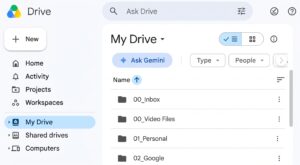
- 2-1: Saving to Google Drive: Save the downloaded PDF to a dedicated research folder in Google Drive (e.g., named “Generative AI and Gender Bias”). Centralizing all literature downloads in this folder streamlines downstream workflows. (Video tutorial)
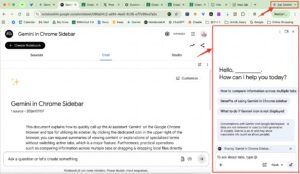
- 2-2: Ingesting Sources into Gemini Notebook: To generate summaries, slides, or audio, import the PDF into Gemini Notebook. Create a new notebook titled “Generative AI and Gender Bias.” Click + Add sources in the top left, select Google Drive, navigate to your folder, select the PDF, and insert it. (Video tutorial)
- 2-3: Slide-Based Summarization: While reading the full PDF text is essential, having AI generate a structured slide outline provides an immediate visual overview of core arguments. Select Slide Deck from the Studio menu on the right, ensure the source PDF is checked on the left, and click Generate.
- 2-4: Podcast-Style Audio Overview: In the Studio menu, click Audio Overview to generate a podcast-style dialogue hosted by two synthetic AI voices discussing the paper. Listening to this audio via the mobile app while commuting or resting allows you to make productive use of fragmented downtime. (Note: Generative AI models tend to lean positive rather than critical, so evaluate their summaries with an analytical mindset.)
(2) J-STAGE
URL: https://www.jstage.jst.go.jp/browse/-char/ja
- Basics
- Practical Guide
J-STAGE (Japan Science and Technology Information Aggregator, Electronic) is an electronic journal platform developed by the Japan Science and Technology Agency (JST) hosting academic periodicals published by Japanese societies.
Key Features:
- Extensive Coverage and Currency: Houses over 3,000 academic journals. Many societies publish advance online issues before print distribution.
- High Open-Access Ratio: Approximately 90% of indexed papers provide free full-text access (PDF or HTML).
- Global Indexing: Integrated with Crossref (DOI minting) and global discovery services to disseminate Japanese scholarly output internationally.
Comparison: J-STAGE vs. CiNii Research
| Item | J-STAGE | CiNii Research |
| Role | Direct electronic publishing & distribution platform | Federated search database across academic information |
| Primary Scope | Society journals affiliated with J-STAGE | Broad resources (library holdings, repositories, J-STAGE) |
| Feature | Direct full-text reading for most papers | Comprehensive identification of where materials exist |
(1) Search and Download
Searching 生成AI バイアス (Generative AI bias) on J-STAGE yielded a paper presented at the 2025 Annual Conference of the Japanese Society for Artificial Intelligence (JSAI). Saving this PDF into our shared Google Drive folder prepares it for analysis. (Video tutorial)
(2) Generative AI Summarization and Slide Conversion
- 2-1: Import the saved PDF into Gemini Notebook as an active source.
- 2-2: Select Generate Slide Deck from the Studio panel. (GIF tutorial)
- 2-3: Open a new Google Slides deck, navigate to File > Open, and import the generated PowerPoint file to convert it into native Google Slides format. This allows direct web sharing or embedding. (Caution: Ensure public sharing does not infringe upon third-party copyrights.)
(3) NDL Search (National Diet Library)
URL: https://ndlsearch.ndl.go.jp
- Basics
- Practical Guide
NDL Search is Japan’s largest bibliographic and academic discovery portal. It enables federated searches across the collections of the National Diet Library, public libraries, university libraries, public archives, and digital repositories nationwide.
Key Features:
- Massive Discovery Scope: Covers books, periodicals, newspapers, doctoral dissertations, magazine article indexes, maps, audio records, and digital media.
- Direct Access to Digitized Works: Seamlessly links to the NDL Digital Collections and external platforms like J-STAGE.
- Remote Photoduplication: Registered users can order physical or digitized copies of holding materials online without visiting the library in person.
- Research Navi Guides: Features integrated pathfinders that explain how to research specific disciplines and find foundational references.
Search Syntax Tips:
- AND Search: Separate keywords with spaces (e.g.,
生成AI ジェンダー・バイアスreturned 13 hits). - Prefix Search: Append an asterisk
*(e.g.,Y18*). - Phrase Search: Enclose in double quotes (e.g.,
"library science"). - Exclusion Search: Prepend a minus sign preceded by a space (e.g.,
AI -人工知能).
International Literature Databases
(1) Google Scholar
URL: https://scholar.google.com
- Basics
- Practical Guide
Google Scholar is a freely accessible search engine indexing academic literature across publishing formats and disciplines, including peer-reviewed papers, theses, preprints, books, conference proceedings, and patents.
Differences from Standard Google Search:
- Curated Scope: Indexes academic repositories, university servers, and peer-reviewed journals while filtering out non-scholarly webpages.
- Citation-Based Ranking: Ranks results by relevance combined with citation counts, surfacing influential landmark papers.
Basic Usage:
- Keyword Search: Input terms such as
Artificial intelligence healthcare. - Viewing Full Texts: Look for
[PDF]or[HTML]links along the right margin of the results to access full texts directly.
Searching 生成AI ジェンダー・バイアス in Japanese returned 699 results. Entering the English equivalent—Generative AI gender bias—returned over 33,000 results, highlighting the sheer volume of English-language scholarly literature.
Translating Downloaded English Papers into Japanese:
Selecting the paper “What ChatGPT Tells Us about Gender: A Cautionary Tale about Performativity and Gender Biases in AI,” downloading its PDF, and uploading it to Gemini with the prompt “Translate this entire English paper into Japanese” produces a complete, translated draft. The output can be exported to Google Docs and archived as a translated PDF for review.
(2) Scopus (Elsevier)
- Basics
- Practical Guide
Scopus is one of the world’s largest curated abstract and citation databases, covering natural sciences, medicine, engineering, social sciences, and humanities.
Key Features:
- Curated Quality: Indexes over 25,000 peer-reviewed titles vetted by an independent Content Selection and Advisory Board (CSAB).
- Citation Tracking: Tracks forward citations and backward references across papers.
- Author Profiling (Scopus Author ID): Distinguishes between researchers with identical names and calculates metrics like publication counts and h-index.
- Journal Metrics: Calculates CiteScore, SJR (SCImago Journal Rank), and SNIP.
Comparison with Other Databases:
| Item | Scopus | Google Scholar | Web of Science |
| Provider | Elsevier | Clarivate | |
| Quality Control | Vetted by independent committee | Broad web crawl (includes non-peer-reviewed) | Highly selective editorial criteria |
| Access Model | Paid institutional subscription | Free | Paid institutional subscription |
| Primary Strength | Broad journal list, advanced citation analytics | Speed, comprehensive grey literature/preprints | Elite journals, deep historical citation archive |
Workflow: Searching Generative AI Gender Bias produced 318 results. Accessing the paper, downloading the PDF via View PDF, and uploading it to Gemini Notebook allows you to select Infographic in the Studio panel to generate a visual summary poster of the study.
(3) Web of Science (Clarivate)
- Basics
- Practical Guide
Web of Science is a premier citation database tracing its roots to the Science Citation Index (SCI) developed in the 1960s. It indexes journals meeting strict editorial standards.
Key Features:
- Stringent Selection: Indexes approximately 21,000 journals reviewed for editorial rigor and citation impact.
- Foundation of the Impact Factor: Serves as the underlying dataset for Clarivate’s annual Journal Citation Reports (JCR).
- Citation Network Analysis: Enables deep backward-and-forward citation mapping spanning over five decades.
Workflow: Searching Generative AI gender bias returned 325 results. The top result—a paper with 18 citations—was downloaded via the publisher’s Free Full Text link. Uploading the PDF to Gemini with the prompt “Please summarize this English paper in 500 Japanese characters” generated the following synthesis:
Summary:
This qualitative study examines latent gender bias in visual depictions of occupations generated by image-generation AIs (DALL-E 3 and Bing Image Creator). Replicating earlier work on DALL-E 2 with its updated version, it also conducts the first systematic investigation of the widely used Bing Image Creator.
Analysis revealed slight improvements in DALL-E 3, with women appearing in historically male-dominated roles such as CEOs and physicians. However, strong sexual objectification biases persisted, depicting women as excessively young and conventionally attractive.
Bing Image Creator exhibited similar stereotyping: male teachers and journalists were depicted as authoritative and senior, whereas females were framed passively with an emphasis on youthful appearance. When prompted with “children playing,” boys were shown with toy trucks while girls were depicted in pink dresses with soap bubbles, reinforcing traditional gender roles from early childhood.
The authors conclude that contemporary generative AI models reproduce and amplify systemic gender inequities, arguing for continuous corrective measures and ethical data curation.
(4) Academic Search Ultimate (EBSCOhost)
URL: https://about.ebsco.com/ja-jp/products/research-databases/academic-search-ultimate
- Basics
- Practical Guide
Academic Search Ultimate is a massive multidisciplinary full-text database hosted on EBSCOhost, widely licensed by higher education institutions worldwide alongside Scopus and Web of Science.
Key Features:
- High Full-Text Availability: Provides direct full-text (PDF/HTML) access to over 10,000 peer-reviewed journals.
- Broad Multidisciplinary Reach: Covers humanities, social sciences, natural sciences, medicine, engineering, and arts.
- Primary Source Materials: Contains academic books, reports, conference proceedings, and Associated Press news reels.
- Integrated Literature Suggestions: Recommends related papers on identical topics and provides integrated AI-generated overviews alongside search results, speeding up snowball sampling for literature reviews.
(5) JSTOR
- Basics
- Practical Guide
JSTOR (short for “Journal STORage”) is a digital archive of academic journals, books, and primary sources with deep strength in the humanities and social sciences.
Key Features:
- Archival Backfiles: Houses complete runs of academic journals from Volume 1, Issue 1 up to recent years, making it indispensable for historical and foundational literature.
- The “Moving Wall”: Operates on a delay window (typically 1–5 years between the latest published issue and archival inclusion) to protect publisher subscription models. It is designed for historical depth rather than breaking real-time publications.
Workflow: Searching (Generative Ai) AND (Controversy) surfaced a relevant UNESCO report. After downloading the PDF, open Gemini Canvas, upload the document, and prompt:
"Create a presentation slide deck structure based on the attached document. Output it in slide format suitable for export to Google Slides."
Export the resulting presentation directly to Google Slides, where you can generate an embed code to display the slides on a webpage.
(6) ScienceDirect (Elsevier)
URL: https://www.sciencedirect.com
- Basics
- Practical Guide
ScienceDirect is Elsevier’s dedicated publishing platform hosting over 2,500 journals and 40,000 electronic books across physical sciences, engineering, life sciences, health sciences, and social sciences.
Searching our standard keywords returned 17,305 results—an enormous volume reflecting its status as a primary source for peer-reviewed technical and AI-related literature.
(7) Wiley Online Library
URL: https://onlinelibrary.wiley.com
- Basics
- Practical Guide
Wiley Online Library is the scholarly platform of John Wiley & Sons, hosting over 1,600 journals, extensive online book series, laboratory protocols (Current Protocols), and reference encyclopedias. Searching Generative AI Gender Bias returned over 20,000 hits, providing an extensive catalog of peer-reviewed articles.
(8) Taylor & Francis Online
URL: https://www.tandfonline.com
- Basics
- Practical Guide
Taylor & Francis Online hosts over 2,700 peer-reviewed journals from Taylor & Francis and Routledge, known for their focus on the humanities and social sciences (education, sociology, media, and psychology). Its granular facet filtering enables precise filtering by publication format, subject domain, and open-access licensing.
(9) Sage Journals
URL: https://journals.sagepub.com
- Basics
- Search Guide
Sage Journals hosts more than 1,100 high-impact peer-reviewed journals published by Sage Publishing, known for its holdings in sociology, communication, education, and political science. Searching within the “Humanities & Social Sciences” subject filter for Generative AI Gender Bias yielded 13,563 results, with unlocked green icons indicating accessible full-text downloads.
(10) Springer Nature Link
URL: https://link.springer.com
- Basics
- Practical Guide
Springer Nature Link (formerly SpringerLink) indexes over 3,000 journals and 300,000 books from Springer, Nature Portfolio, BioMed Central, and Palgrave Macmillan. It offers extensive coverage in STEM alongside specialized social science monographs and lecture note series (Lecture Notes in Computer Science). Articles labeled “Full access” provide direct PDF downloads.
International Literature Databases: Comparative Overview
| Service | Supported Languages | Covered Disciplines | Key Characteristics | Estimated Record Count | Core Advantages |
| Google Scholar | Multilingual (EN, JA, etc.) | All disciplines | Free, web-scale academic search engine | Undisclosed (Est. 380M+) | Universally accessible without institutional contracts; intuitive keyword discovery |
| Scopus (Elsevier) | Primarily EN (Multilingual metadata) | All disciplines | Largest curated abstract and citation database | 94M+ | Robust citation tracking and h-index metrics for objective trend evaluations |
| Web of Science (Clarivate) | Primarily EN (Multilingual metadata) | All disciplines | Highly curated indexing based on strict editorial standards | 170M+ | Filters out low-quality journals; industry-standard citation networks |
| Academic Search Ultimate (EBSCO) | Multilingual (Primarily EN) | All disciplines | Massive multidisciplinary full-text database | 10,000+ full-text journals (Tens of millions of records) | High full-text PDF availability across both STEM and humanities in a single interface |
| JSTOR | Primarily EN | Humanities, Social Sciences, Natural Sciences | Specialized in archival backfiles from Volume 1, Issue 1 | 12M+ | Indispensable for historical foundational literature; comprehensive full-text searches |
| ScienceDirect (Elsevier) | Primarily EN | STM, Social Sciences, Humanities | Dedicated platform for Elsevier journals and eBooks | 20M+ | Direct full-text access to primary STM literature with rapid advance publishing |
| Wiley Online Library (Wiley) | Primarily EN | All disciplines | Platform for Wiley journals, books, and reference works | 8M+ | Hosts official journals of premier international societies; strong across diverse fields |
| Taylor & Francis Online | Primarily EN | All disciplines (Strong in Humanities/Social Sciences) | Platform for Taylor & Francis and Routledge journals | 5M+ | Extensive holdings in specialized, niche humanities and social sciences |
| Sage Journals (SAGE) | Primarily EN | Social Sciences, Humanities, STM | Dedicated platform for Sage Publishing journals | 1,100+ journals (Millions of records) | Houses top-tier citation-ranked journals in sociology, psychology, and media studies |
| Springer Nature Link | Primarily EN | STEM, Humanities, Social Sciences | Integrated portal for Springer Nature, Nature Portfolio, Palgrave | 15M+ | High volume of full-text electronic books, encyclopedias, and technical lecture series |
6. Selecting a Research Methodology
6-1: Quantitative Research (Statistical Data Analysis, Surveys, Experiments)
- Definition: Quantitative research conceptualizes phenomena as numerical data, employing statistical procedures to identify objective facts, trends, and relationships (answering “How many / how much” and testing correlations between variables).
- Core Characteristics:
- Objective and Replicable: Minimizes researcher bias through standardized numerical outputs; identical datasets yield identical results regardless of who conducts the analysis.
- Generalizability: Appropriate probability sampling allows findings from a sample (e.g., $N = 1,000$) to be generalized to the broader population.
- Hypothesis-Testing: Operates primarily by formulating an explicit a priori hypothesis (“If A, then B”) and testing it against empirical data.
- Representative Methods:
- Surveys (Web / Paper): Gathers standardized responses via Likert scales and closed-ended options.
- Experimental Designs (A/B Testing, Controlled Lab Experiments): Manipulates independent variables across treatment and control groups to measure outcome differences.
- Secondary Data Analysis / Big Data: Processes official government statistics, access logs, or transaction histories to uncover underlying trends.
6-2: Qualitative Research (Case Studies, In-Depth Interviews)
- Definition: Qualitative research collects and analyzes non-numerical data—including spoken language, nonverbal behaviors, emotions, and cultural contexts—to interpret deeper meanings and motivations (answering “Why” and “How”).
- Core Characteristics:
- Context- and Process-Oriented: Explores the circumstances, personal histories, and processes that lead individuals to specific perspectives.
- Hypothesis-Generating: Inductively identifies underlying patterns within observational and interview data to build new models and concepts.
- Flexible Research Design: Allows real-time adjustments to interview questions and observational focus as new insights emerge in the field.
- Representative Methods:
- In-Depth Interviews: One-on-one sessions that explore participant values, emotional responses, and life histories.
- Focus Group Discussions (FGD): Group conversations capturing participant interactions and collective norms.
- Participant Observation / Ethnography: Immersion within the subjects’ lived environment to record unarticulated practices.
- Textual & Discourse Analysis: Coding qualitative texts (social posts, interview transcripts, historical records) to categorize core themes.
6-3: Comparing Quantitative and Qualitative Research
| Comparison Item | Quantitative Research | Qualitative Research |
| Fundamental Purpose | Testing hypotheses; identifying aggregate trends and causal links | Formulating hypotheses; illuminating mechanisms and contexts |
| Core Inquiries | “How much / many?”, “What percentage?”, “To what degree?” | “Why did this happen?”, “How does it unfold?” |
| Approach | Deductive (tests predefined hypotheses against data) | Inductive (derives theories from field observations and text) |
| Data Types | Numerical values (counts, ratings, ratios, analytics) | Qualitative materials (transcripts, field notes, images) |
| Primary Methods | Structured surveys, controlled experiments, data mining | Semi-structured interviews, focus groups, ethnography |
| Sample Size | Large ($N$ must meet statistical power requirements) | Small (in-depth examination of a targeted group) |
| Analytical Approach | Statistical analysis (regression, ANOVA, $t$-tests) | Thematic analysis, grounded theory, text coding |
| Objectivity | High (standardized, mathematically reproducible) | Dependent on researcher interpretation and reflexive rigor |
| Generalizability | High (generalizable through proper sampling frames) | Low (context-dependent; values transferability over statistical generalizability) |
| Key Advantages | High objectivity; efficient processing of large datasets | Uncovers tacit nuances and complex motivations behind behaviors |
| Key Limitations | Struggles to capture deep psychological contexts or novel unlisted factors | Resource-intensive (transcription/coding); cannot assert aggregate prevalence |
7. Structuring and Writing an Academic Paper
7-1: Title
The paper title serves as the primary metadata that readers use to find your work and constitutes their first impression. It must accurately reflect the scope and findings of the study without being unnecessarily long. Include essential keywords to maximize search discovery. Subtitles can help clarify the specific scope or empirical context of the study.
7-2: Table of Contents
The Table of Contents outlines the paper’s chapters and sections alongside their respective page numbers. Positioned immediately prior to the main text (after the abstract and acknowledgments), it helps readers navigate the document and assess its structural flow:
Plaintext
Table of Contents
Abstract ....................................................... i
Chapter 1: Introduction ........................................ 1
  1.1 Background and Objectives ................................ 1
  1.2 Structure of the Paper ................................... 3
Chapter 2: Literature Review ................................... 5
  2.1 Comparing Quantitative and Qualitative Paradigms ......... 5
  2.2 Methodological Gaps in Prior Research .................... 8
Chapter 3: Methodology ........................................ 12
  3.1 Data Collection Procedures .............................. 12
  3.2 Analytical Framework and Modeling ....................... 15
Chapter 4: Results and Discussion ............................. 18
  4.1 Empirical Findings ...................................... 18
  4.2 Discussion and Limitations .............................. 22
Chapter 5: Conclusion ......................................... 25
Acknowledgments ............................................... 27
References .................................................... 28
Appendices .................................................... 31
7-3: Abstract
The abstract summarizes the entire paper within 100 to 250 words, stating the research problem, academic significance, methods, results, and conclusion:
| Component | Essential Content |
| 1. Background & Problem | The academic or societal context justifying the study and the gap being addressed. |
| 2. Objective | Exactly what the study investigates and clarifies. |
| 3. Methodology | The data sources, experimental setup, or analytical models employed. |
| 4. Results | The core findings, patterns, or statistical outcomes identified. |
| 5. Conclusion & Value | The implications of the findings and their broader scholarly or practical contributions. |
7-4: Introduction
The Introduction establishes the problem, research objectives, and scholarly significance. It reviews prior literature to map the current state of knowledge, exposes existing gaps, and articulates the theoretical framing and contributions of your paper.
7-5: Research Method
This section provides sufficient detail for readers and peer reviewers to evaluate the validity, reliability, and replicability of your study:
- Research Design: State your overarching approach (quantitative, qualitative, or mixed-methods) and justify why it is best suited to the research question.
- Participants and Sampling: Specify selection criteria, sample size, and demographic characteristics of human subjects, documents, or data sources.
- Data Collection Procedures: Document the step-by-step collection workflow.
- Quantitative: Survey instrument length, measurement scales, administration windows, response rates, and experimental hardware/software configurations.
- Qualitative: Interview environments, duration, protocols (e.g., semi-structured), recording/transcription standards, and field observation protocols.
- Data Analysis: Detail the statistical tests, coding frameworks, or computational pipelines used to evaluate the data.
7-6: Results
The Results section presents findings neutrally without interpretive commentary:
- Sample Demographics: Basic descriptive metrics of the sample (valid response rates, demographic breakdowns, or participant profiles).
- Primary Findings: Core discoveries addressing your central hypotheses or research questions (descriptive statistics, regression coefficients, $p$-values, or extracted qualitative themes and direct illustrative quotes).
- Secondary Findings: Incidental observations, exploratory patterns, or unexpected trends outside the primary hypotheses.
7-7: Conclusion
The Conclusion closes the paper by summarizing what the study revealed and why it matters. Unlike the abstract, the conclusion addresses readers who have finished the entire paper, providing a synthesis of key takeaways, real-world implications, and broader disciplinary impact.
7-8: Discussion
The Discussion section interprets the findings, contextualizing their broader theoretical and practical implications:
- Interpretation of Primary Findings: Explains what the empirical results mean conceptually.
- Integration with Prior Literature: Compares findings directly with earlier studies. If results diverge, discuss potential reasons (e.g., distinct sampling frames, methodological differences, or historical shifts).
- Underlying Mechanisms: Proposes logical explanations for why the observed relationships or phenomena occurred.
- Research Limitations: Acknowledges methodological constraints, sample limitations, or measurement boundaries.
- Future Directions: Suggests concrete avenues for follow-up investigations.
7-9: Notes and References
List all sources cited in the text at the end of the paper. Explanatory notes may be placed as footnotes on the corresponding page or aggregated as endnotes before the reference list.
Citation formats depend on your target journal’s style guide. Below are examples across three major citation styles:
1. APA Style (7th Edition)
Author-date format arranged alphabetically, common in psychology, education, and social sciences.
- Book:
Smith, J. A. (2020). Quantitative and qualitative research methods: A comprehensive guide. Academic Press. - Journal Article:
Tanaka, T., & Miller, P. (2022). Evaluating survey data in qualitative analysis. Journal of Educational Research, 45(2), 115–130. https://doi.org/10.1016/j.jer.2022.01.005 - Webpage:
World Health Organization. (2023, March 15). Guidelines on digital health interventions. https://www.who.int/publications/i/item/9789240003194
2. Vancouver Style
Numbered citation system arranged by order of appearance in the text, common in medicine and natural sciences.
- [1] Smith JA. Quantitative and qualitative research methods: A comprehensive guide. New York: Academic Press; 2020.
- [2] Tanaka T, Miller P. Evaluating survey data in qualitative analysis. J Educ Res. 2022;45(2):115–130.
- [3] World Health Organization. Guidelines on digital health interventions [Internet]. Geneva: World Health Organization; 2023 [cited 2026 Sep 4]. Available from: https://www.who.int/publications/i/item/9789240003194
3. Standard Japanese Academic Style (Humanities & Social Sciences)
Arranged in Japanese alphabetical (gojūon) order.
- Book:
Yamada, Taro. (2021). Introduction to Social Research Methods: Integrating Quantitative and Qualitative Approaches. Gakujutsu Shuppan. - Journal Article:
Sato, Hanako, & Suzuki, Ichiro. (2023). “Validity of Thematic Analysis in Interview Research.” Social Science Studies, 30(1), 45–60. - Translated Book:
Smith, J. A. (2022). Theory and Practice of Qualitative Research (J. Tanaka, Trans.). Iwanami Shoten. (Original work published 2020). - Website:
Ministry of Education, Culture, Sports, Science and Technology (MEXT). (2024). “Guidelines on the Use of Generative AI in Academic Research.” Accessed September 4, 2026, https://www.mext.go.jp/sample_path.
While generative AI dramatically improves learning and research productivity across many domains, it is particularly effective for language acquisition. Drawing on its vast linguistic knowledge base, generative AI responds instantly to complex requests—whether for compiling vocabulary decks, translating texts, crafting illustrative example sentences, or generating verb conjugation tables.





Comments